![{$v[2]社交图标](/uploadfile/202607/d48465068ed5887bb35bf9ccf663eb12.png)
![{$v[2]社交图标](/uploadfile/202607/a3a97666a9e164435479a8cb5039711a.png)


Advantages of Hydraulic Fixtures
time:2026-07-15
Source:
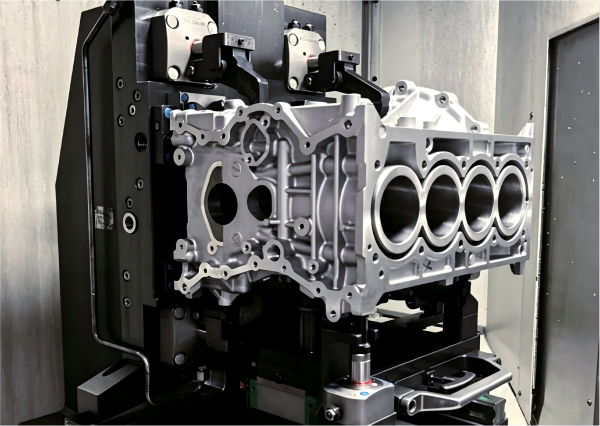
Recently, nearly all manufacturers aim for lower costs and higher output, and the key to achieving this goal lies in adopting the right production solutions. Many companies still rely on traditional mechanical clamping for machining, yet this outdated method is gradually falling behind and hindering production performance. Today’s advanced fixtures can resolve most prevalent production headaches. There is a wide variety of fixtures available, and this article compares hydraulic fixtures against conventional mechanical clamping methods.
Firstly, hydraulic fixtures drastically cut down the time spent clamping and unclamping workpieces. Statistical data shows hydraulic clamping saves 90%–95% of clamping time compared with mechanical clamping. This shortens production cycle times, boosts machine tool utilization, raises overall output and ultimately reduces unit production costs. For long aluminum alloy workpieces, swing clamp cylinders enable rapid unclamping and instant resetting.
The second key strength of hydraulic fixture systems is superior positioning accuracy. Clamping force remains constant throughout positioning and clamping, guaranteeing consistent machining quality across batches. Scrap rates caused by workpiece deformation are reduced to a minimum. When machining thin-walled parts or workpieces lacking rigid support points, auxiliary floating support cylinders deliver optimal performance. Combining swing clamp cylinders with floating support cylinders prevents workpiece deformation during clamping.
The third advantage of hydraulic fixtures is their adaptability to compact workpiece layouts and confined operating spaces that render manual clamping impractical. For instance, clamping positions located far from operators on the machine table, out of manual reach. Operators can easily control clamping and unclamping via directional control valves. Multiple workpieces can be mounted on a single fixture base for simultaneous machining. Modular hydraulic fixtures support multi-station clamping, drastically lifting production efficiency. While hydraulic fixtures demand higher upfront investment due to matching hydraulic power units, this expenditure proves highly cost-effective in the long run.
Hydraulic fixtures slash unnecessary production losses and deliver stable, hassle-free machining. As one factory manager commented: “We used to fail to hit production quotas on schedule. Loose clamping from mechanical fixtures triggered massive losses, drove up labor costs and left us unable to fulfill order volumes, hurting corporate profitability. After switching to hydraulic fixtures, all these issues vanished. We no longer suffer losses from insufficient clamping force, consistently finish production targets ahead of schedule and generate far greater profits.” It is therefore clear that hydraulic fixtures have become indispensable equipment for machining manufacturers.
